Pokémon TCG Deck Thinning Strategy: Search Cards & Timing
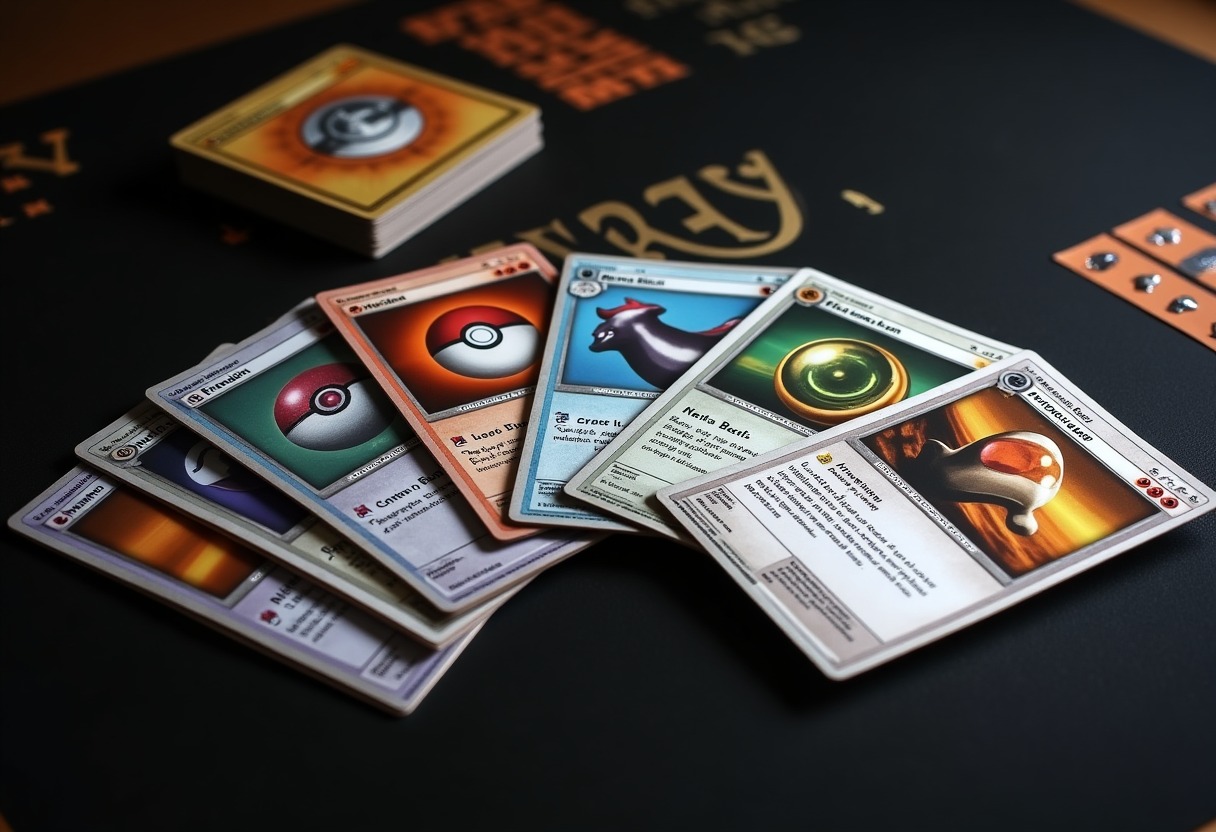
Deck thinning in Pokémon TCG matters less than most players think — until it suddenly matters more than anything else in your match. The difference between burning an Ultra Ball on Turn 1 versus holding it for a critical setup piece determines whether you're drawing into Rare Candy when you need it or staring at dead Energy cards with no way forward.
What Deck Thinning Actually Does in Pokémon TCG
Deck thinning refers to removing cards from your deck through search effects, not through drawing. Every Nest Ball, Ultra Ball, and Battle VIP Pass physically reduces your remaining deck size, which theoretically improves your odds of drawing specific cards later. The keyword is "theoretically" — the actual math shows smaller gains than intuition suggests.
A 60-card deck with 10 Trainer cards has a 16.7% chance per draw to hit a Trainer. Thin five cards (none of them Trainers), and your 55-card deck now has an 18.2% chance — a 1.5 percentage point improvement. Over a seven-turn game where you draw ten cards total, that marginal gain adds roughly 0.15 extra Trainers across your draws. Not nothing, but not the revolution some articles claim.
The real value of deck thinning comes from two sources: removing variance from specific draw sequences and accelerating your access to combo pieces. When you use Computer Search to grab a crucial Stadium, you're not just thinning — you're guaranteeing you hit what you need when you need it. That's deck velocity, not thinning.
When to Prioritize Search Cards Over Direct Draw
Search cards and draw cards solve different problems. Professor's Research gives you seven new cards but forces you to discard your hand — velocity with a cost. Ultra Ball gives you exactly the Pokémon you need but costs a discard and doesn't advance your overall card count. Understanding which scenario you're in determines optimal play.
Early-game setup phases favor search over draw. If you open with Ralts in the Active and need to find Kirlia plus Rare Candy before your opponent takes control, chaining Nest Ball into Level Ball into Ultra Ball gets you there faster than hoping Professor's Research delivers both pieces in seven random cards. You're building a specific board state, not fishing for resources.
Mid-game resource accumulation favors draw over search. Once your board is established and you're racing to power up attackers, → Shop pokemon tcg accessories on Amazon like Colress or Roxanne that flood your hand with options outperform narrow searches. You know what pieces you need (Energy, switching cards, disruption), but you need volume to find them.
Late-game precision demands search again. When you're down to your last three Prize cards and need Boss's Orders into a specific Energy attachment, burning an Ultra Ball to guarantee your Radiant Charizard is correct even if it "wastes" the thinning value. The game ends in two turns — incremental draw improvements mean nothing compared to executing your winning line.
Search Card Timing: The Ultra Ball Decision Tree
| Game State | Correct Timing | Reasoning | Common Mistake | |------------|----------------|-----------|----------------| | Turn 1, going second, no evolution in hand | Immediate use | Board development outweighs future thinning; delays cost game tempo | Holding for "better targets" while opponent establishes board | | Turn 2-3, evolution line incomplete | Use on bench development | Building backup attackers maintains pressure even if Active gets KO'd | Over-searching for perfect Active while leaving bench empty | | Turn 4+, all key Pokémon in play | Hold unless critical need | Preserving hand size for Judge/Marnie protection; future draws more valuable | Auto-piloting searches out of habit | | Prize disadvantage (4-2 or worse) | Hold for combo pieces | One-turn power plays require specific hands; thinning won't save you | Searching for general value instead of specific outs |
The biggest timing error competitive players make: using Ultra Ball to grab a Pokémon they'll naturally draw into anyway. If you're running four Squawkabilly ex and have already seen two, burning discard cards to fetch the third when you have three turns before you need it wastes resources. You're thinning your deck by removing good cards (the discards) to find a card that's now 2-in-52 odds per draw. The math doesn't work unless you need it this turn.
Turn 1 Ultra Ball decisions split the competitive community. Going first with no Supporter, the argument goes: do you immediately fetch your Pidgeot ex line to guarantee Turn 2 evolution, or hold Ultra Ball until you see your opening Supporter draw to avoid redundancy? The answer depends on your Pokemon Tcg Opening Hand Probability — if you're running 12+ draw Supporters, you'll likely hit one naturally and should preserve Ultra Ball for a reaction play. Under 10 Supporters, the risk of missing draw support makes immediate evolution search correct.
Deck Velocity Optimization vs True Thinning
Velocity measures how quickly you access your deck's total resources. Thinning measures how you improve remaining draw quality. These concepts overlap but serve different strategic goals, and confusing them leads to misplays.
Professor Sada's Vitality is pure velocity — you're drawing three cards and losing nothing. No thinning occurs because you don't remove cards from the deck except through the draw itself. Battle VIP Pass is pure thinning — you search out Basics and shuffle, reducing deck size by one or two cards without drawing anything new. Arven is hybrid — you get a Tool and an Item (velocity) while removing two specific cards from your deck (thinning).
Decks that win through overwhelming card advantage prioritize velocity. Gardevoir ex builds that run three Munkidori plus multiple Unfair Stamp want to see as many cards as possible each turn because their win condition is resource superiority. Every Professor's Research is correct because drawing into more Psychic Energy, more switching cards, and more disruption compounds your advantage. Thinning barely matters when you're drawing 8-10 cards per turn anyway.
Decks that win through specific combinations prioritize thinning. Stage 2 evolution decks running Rare Candy need to see Candy + Evolution + Basic in the right sequence, which is easier from a 50-card deck than a 58-card deck. Each Nest Ball that removes a Basic from your deck improves your odds of drawing Candy when you draw next turn. The thinning has strategic value because your deck has specific "nuts and bolts" that must align.
Proper Pokemon Tcg Deck Consistency Math Hypergeometric Probability Mulligans Optimal Counts reveals why velocity beats thinning in almost every scenario: drawing more cards gives you more total chances to hit what you need, while thinning only marginally improves each individual draw's odds. Drawing 10 cards from a 60-card deck beats drawing 7 cards from a 54-card deck for finding any specific 4-of card.
Essential Deck-Building Products for Consistent Thinning Practice
Testing thinning strategies requires tracking your deck manipulation over dozens of games. Physical tools matter because accurate shuffling affects thinning efficiency — clumped cards make thinning look better than it is, while thoroughly randomized decks reveal true probabilities.
→ Shop pokemon tcg playmat on Amazon with clearly marked zones helps you track searched cards versus drawn cards during practice sessions. Laying out each turn's search targets in order shows patterns in your thinning timing. If you're consistently searching on Turn 1, Turn 3, and Turn 5, you can measure how that rhythm affects your Turn 6-7 draw quality.
Quality → Shop pokemon card sleeves on Amazon maintain consistent shuffle randomization. Worn sleeves stick together, creating false clusters that make deck thinning appear more impactful than it is. Fresh sleeves every tournament season ensures your practice data reflects true probabilities, not shuffle bias. Our Best Pokemon Sleeves guide covers tournament-legal options.
→ Shop card shuffling mat on Amazon provides the surface area for proper pile shuffling and riffle techniques. Competitive play requires thorough randomization after every search effect — lazy shuffles undermine both testing accuracy and tournament legality. A dedicated shuffling surface forces correct habits.
→ Shop pokemon deck boxes on Amazon with card count windows let you track deck size at a glance during games. When you're testing whether thinning to 45 cards by Turn 4 actually improves your Turn 5 draw, visual confirmation of deck size removes guesswork. For storage between testing sessions, check our Best Card Protectors Organizers.
Advanced Thinning: Energy Sequencing and Prize Card Math
The hidden skill in deck thinning is managing Energy card ratios as your deck shrinks. Most decks run 8-12 Energy across 60 cards — 13-20% of the deck. Thin 15 cards through searches and draw, removing zero Energy, and your remaining 45-card deck is now 17.8-26.7% Energy. That shift changes your Energy attachment probability significantly.
Experienced players track Energy locations obsessively. If you've drawn or discarded four of your 10 Lightning Energy by Turn 3, you know six remain in a ~52-card deck — 11.5% per draw. If your next two draws are both Lightning, you're now at four Energy in 50 cards — 8% per draw, below your deck's original 16.7% ratio. This matters for decks like Raging Bolt ex where Energy sequencing determines whether you power up in three turns or five.
Prize card math complicates thinning strategy because six cards are effectively removed from your deck at the start. If critical pieces are prized, no amount of thinning helps — you can't search what's in the Prize pool. This creates a paradox: thinning improves draw quality by removing known quantities, but Prize cards create unknown quantities you can't thin around.
Smart players adapt thinning tempo based on Prize card reveals. If your first two Prizes reveal both copies of a crucial Basic Pokémon, aggressive early thinning becomes less valuable because you've already lost access to key search targets. Shift strategy toward velocity — draw more cards to find alternate lines rather than thinning to improve odds on cards you now know aren't available.
The Pokemon Tcg Prize Cards Strategic Math Decision Trees analysis shows how Prize card variance overshadows thinning gains in most matches. Even perfect thinning can't overcome losing your only copy of a combo piece to Prizes, which is why competitive decks run thick counts (4x) of critical cards and thinner counts (1-2x) of luxury options.
FAQ
Does deck thinning actually matter in a 7-8 turn Pokémon TCG game? Thinning provides marginal improvements (1-3 percentage points per draw) that rarely decide games on their own. The real value comes from what you search and when, not the deck size reduction itself. Velocity through draw Supporters outperforms thinning in almost every scenario.
When should I use Ultra Ball instead of Nest Ball or Level Ball? Use Ultra Ball when you need flexibility (any Pokémon including evolutions) or when your target isn't covered by Nest Ball's Basic restriction or Level Ball's HP requirement. The discard cost matters more than the thinning effect — only burn valuable hand cards when the target justifies the resource loss.
How many search cards should a consistent deck run? Most competitive decks run 8-12 total search effects (Ultra Ball, Nest Ball, evolution-specific searches, Arven). More than 12 creates diminishing returns because you're drawing search cards when you need action cards. Fewer than 8 increases variance in finding key Pokémon. Our Budget Deck Guide covers optimal ratios for entry-level builds.
Does thinning help more in evolution decks than Basic-focused decks? Yes, but not how most players think. Evolution decks benefit from thinning because they need specific card combinations (Basic + Rare Candy + Stage 2), and removing non-combo pieces improves odds of drawing remaining combo cards together. Basic decks care more about raw card quality since they don't rely on multi-card sequences.
Should I thin aggressively early or save searches for late-game precision? Match your thinning tempo to your deck's game plan. Aggressive early thinning works for setup-dependent strategies (Stage 2 evolution, Energy acceleration) that need specific boards by Turn 2-3. Conservative thinning works for reactive control decks that need hand size and flexibility for disruption. Neither approach is universally correct.
Closing Thoughts
Deck thinning is a tool, not a win condition — use it to execute your game plan faster, not to chase theoretical draw percentages that rarely materialize across a six-round tournament.
Some links on this page are affiliate links. We may earn a small commission if you purchase through them, at no extra cost to you.
As an Amazon Associate we earn from qualifying purchases. This article contains affiliate links; if you buy through them we may earn a small commission at no additional cost to you.
Keep leveling up
More From the Squad
Set reviews, pull-rate data, and the gear the community trusts.